Short answer: No — TonicGreens does not cure, treat, or prevent cold sores. A cold sore is an HSV-1 infection that heals on its own in 7–10 days, and the best-evidenced treatment is an oral antiviral started at the first tingle, with a cream second. TonicGreens is a daily greens powder with no published trial showing it affects cold sores at all.
A cold sore on your lip is miserable: the tingle, the blister, the scab, and the days of trying not to touch it. No surprise, then, that "how to get rid of herpes on lip" is a common search, or that people looking into tonicgreens cold sore reviews find a powder promising to "search and destroy" the herpes virus. This review looks at TonicGreens for lip cold sores, separating what is established from what is only claimed. If a sore has just started, skip to what actually helps.
How we wrote this: we have not hands-on tested TonicGreens. The product description below comes from the maker's own page (tonicggreen.com), and we say so wherever a claim is the maker's rather than an established finding. This article is general information only, not medical advice. Links to the TonicGreens offer are affiliate links.
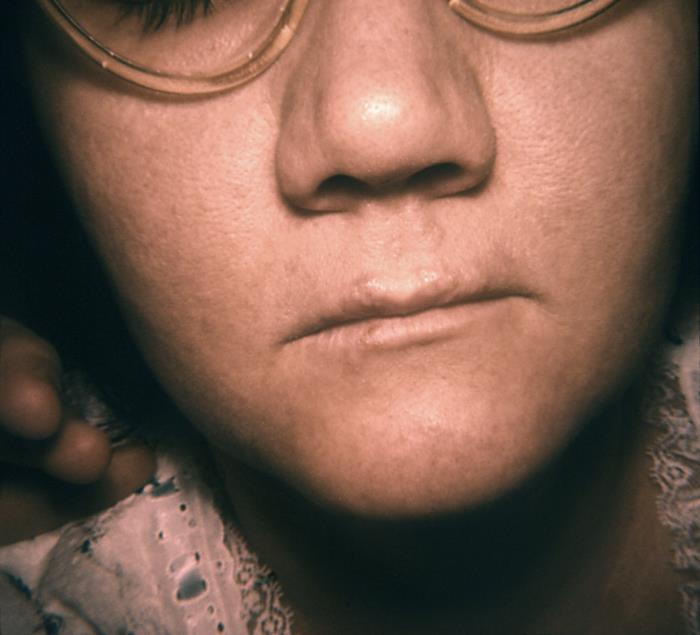
Cover image: CDC Public Health Image Library, PHIL ID 5406, public domain.
What is a cold sore, really?
Short answer: A cold sore is herpes labialis — a blister on or around the lips caused by herpes simplex virus type 1 (HSV-1), which stays dormant in your nerves and can reactivate.
A cold sore, also called a fever blister, is an outbreak of herpes simplex virus type 1. Most cold sores are an hsv 1 infection, though HSV-2 — the strain usually linked to genital herpes — can occasionally cause them too. Of the two strains, hsv 1 and 2, HSV-1 causes the overwhelming majority of lip sores.
The virus does not leave after the sore heals. It retreats into nerve cells — for lip sores, the trigeminal ganglion — and stays dormant, able to reactivate months or years later. That is why cold sores come back — and why nothing you swallow can clear the virus.
An outbreak starts with tingling, itching, or burning, then painful blisters appear, burst, and crust into a scab. The sore heals on its own in 7–10 days; if it has not started to heal within 10 days, see a doctor.
Cold sores are extremely common. The CDC's NHANES survey for 2015–2016 found 47.8% of Americans aged 14–49 carry HSV-1. Outbreaks are often set off by stress, illness or fever, and sun (UV) exposure.
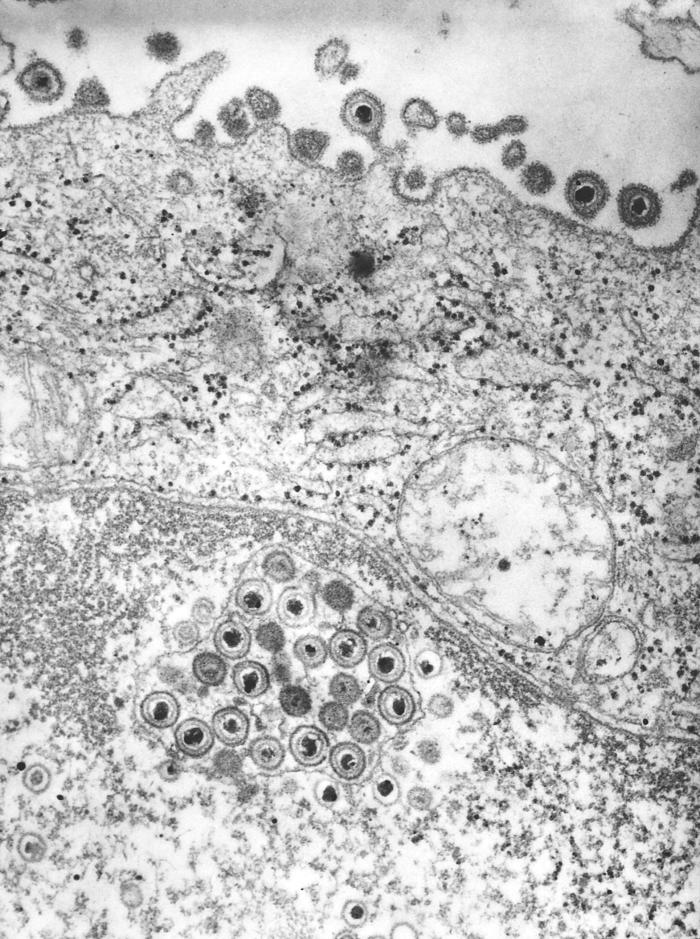
Image: CDC PHIL ID 10260, public domain — HSV virions; the CDC caption notes HSV-1 causes cold sores.
For the wider picture, our evidence review of herpes and TonicGreens covers genital-herpes evidence the same way.
What actually helps a cold sore?
Short answer: An oral antiviral started at the first tingle works best; a cold sore cream is second best. Oral antivirals beat topical creams, and a cream alone is not the primary treatment.
The best-evidenced treatment is an oral antiviral — acyclovir, valacyclovir, or famciclovir — and timing matters most. These medicines work best when started at the first sign of an outbreak, the tingling or burning before any blister appears (the prodrome). Once blisters are fully formed, antivirals help less, so keeping a prescription on hand matters if your sores come back often.
If you cannot get tablets, a cold sore treatment cream is next: acyclovir 5% cream (Zovirax cream), five times a day for four days; penciclovir 1% cream (Denavir); or over-the-counter docosanol 10% (Abreva), five times a day until healed. If you are wondering what acyclovir ointment is used for: it is used for herpes infections of the skin, and the 5% cream is the form used for cold sores (herpes labialis). Dab it on rather than rubbing it in.
A cold sore herpes treatment cream can ease the sore and may shorten healing slightly, but it will not cure the infection or stop the virus returning. Oral antivirals are more effective than topical creams, and topical treatment alone is not the primary treatment. If a sore is very large, very painful, keeps coming back, or has not started to heal within 10 days, see a doctor rather than trying another cream.
How to dry up a cold sore — and what not to do
Short answer: Nothing dries up a cold sore on demand — it heals in stages over 7–10 days. What helps is keeping it clean, starting treatment at the first tingle, and not touching or picking it.
No trick dries a sore up overnight — it runs its course: tingle, blisters, burst, scab, heal. Keep the area clean and dry. If you use a cream, dab it on and do not rub it in. Do not touch the sore except to apply cream, and wash your hands before and after. Do not pick at the scab — picking delays healing and can spread the virus across your face.
Sun is a real trigger, so use sunblock lip balm (SPF 15 or above) outside and avoid your usual triggers. Our guide to living with herpes outbreaks and what actually helps covers triggers and daily habits in more detail.
A cold sore is contagious from the first tingle until completely healed, and can spread to other people and other parts of your body. While you have a sore, do not kiss anyone, do not have oral sex until it has healed, and do not share towels, lip balm, or lip products. Wash your hands whenever you touch the sore. Never kiss a baby while you have a cold sore — it can lead to neonatal herpes, which is very dangerous for newborns.
What is TonicGreens?
Short answer: TonicGreens is a daily greens powder with 57+ ingredients in six groups, sold as a herpes-targeting supplement — but per-ingredient amounts are not disclosed and this site quotes no price for it.
TonicGreens is a powder you mix with water or into a smoothie, taken once a day. The maker describes it as 57+ plant-based ingredients, vitamins, prebiotics, and probiotics in six groups: quercetin sources, a resveratrol berry blend, curcumin, extra antioxidants, an immune phytomix with reishi, shiitake, and maitake mushrooms, and a prebiotic-probiotic blend. Our TonicGreens ingredients explainer breaks down all six groups.
Two facts matter. First, the maker does not disclose how much of each ingredient is in a serving: you can read the list, but you cannot check a dose. Second, this site quotes no price for TonicGreens, because prices differ across lookalike sites and the only reliable source is the maker's own page, tonicggreen.com.
The maker's pitch is bold: its page describes a "SEARCH and DESTROY" process and says the product is "clinically tested and proven" to eliminate the herpes virus. Those are the maker's words — we found no published clinical trial behind them. The maker also offers a 60-day money-back guarantee, according to its page. That is a refund policy, not evidence the product works.
View the TonicGreens product page
Does TonicGreens help cold sores?
Short answer: There is no published evidence that it does. No trial has been found showing TonicGreens affects HSV-1 cold sores, healing time, or recurrence.
This is the question the review turns on, and the answer is a plain no. We searched for a published clinical trial of TonicGreens in people with cold sores, or with HSV-1 at all, and found none. Without a trial, there is no evidence the powder changes how long a sore lasts, how painful it is, or how often sores return.
The ingredient list invites an argument: quercetin, curcumin, and mushroom blends have all been studied in laboratories. It fails twice. First, presence is not dose — with amounts undisclosed, nobody outside the company can say whether a serving contains enough of any ingredient to matter. Second, a laboratory result for an isolated ingredient is not a result for a mixed powder swallowed once a day by a person with a cold sore. What would count is a published trial in people with cold sores measuring healing time or recurrence — and none exists for this product.
That does not make TonicGreens a bad greens powder — as a daily nutrition product it is a broad blend. But a greens powder and a cold sore treatment are different things, and the maker's claim that it eliminates the herpes virus is the maker's claim, not an established finding. Buying it as a cold sore treatment spends money on something with no evidence for that job — and can cost you the window when real treatment works best: the first hours after the tingle starts.
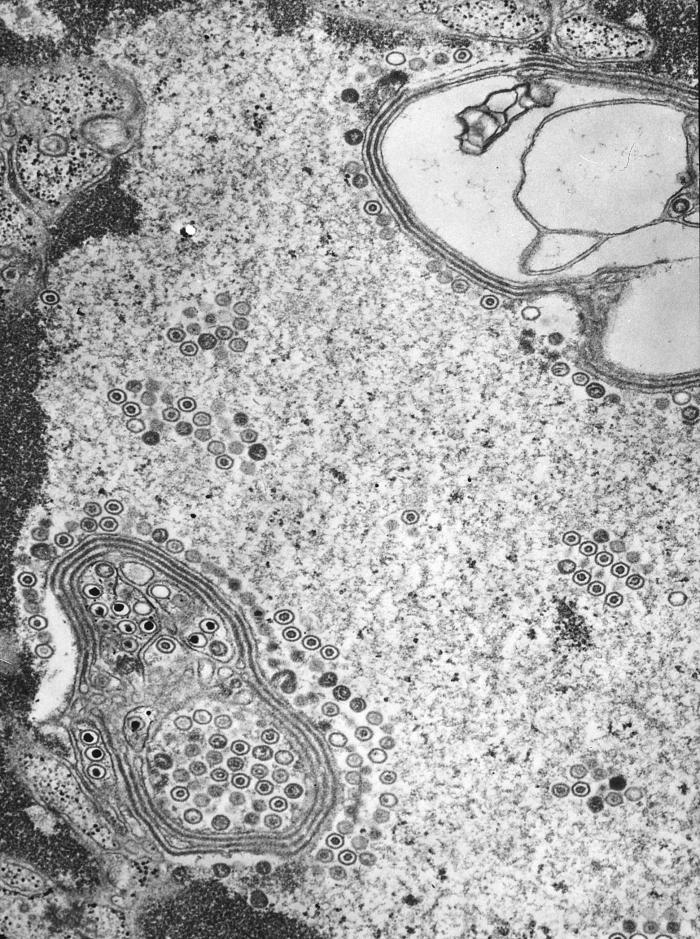
Image: CDC PHIL ID 10261, public domain — HSV virions inside a cell nucleus; the CDC caption notes HSV-1 causes cold sores.
Pros and cons
Short answer: The strengths are a broad ingredient list and a 60-day guarantee; the weaknesses are no published trial, undisclosed amounts, and an unproven claim about eliminating the virus.
Pros
- Broad daily greens blend. 57+ ingredients in six groups, including quercetin sources, a resveratrol berry blend, curcumin, and a mushroom phytomix.
- 60-day money-back guarantee, according to the maker's page.
- Ingredient list is public. Our ingredients explainer walks through all six groups.
Cons
- No published trial for cold sores. No study has been found showing TonicGreens affects HSV-1, healing time, or recurrence.
- Amounts not disclosed. Per-ingredient quantities are not published, so no dose argument can be made for any ingredient.
- Maker claims are unproven. "Clinically tested and proven" and "eliminate the herpes virus" are the maker's words, with no published trial we could find behind them.
- Not a treatment. It does not replace oral antivirals or creams, and buying it instead can waste the early window when antivirals work best.
Who should buy it — and who should skip it
Short answer: Buy it only if you want a daily greens powder and understand it is not a cold sore treatment; skip it if you are buying it to cure, treat, or prevent them.
Who should buy it
Short answer: People who want a broad daily greens powder for general nutrition and have read the ingredient list.
This powder fits a narrow buyer: someone who wants a daily greens supplement and understands it is a nutrition product, not a medicine. If that is you, read our ingredients explainer first and check the guarantee terms.
Who should skip it
Short answer: Anyone buying it to cure, treat, or prevent cold sores, anyone who would delay real treatment to try it, and anyone pregnant, nursing, on medication, or immunocompromised who has not asked a doctor first.
Skip it if cold sores are why you are looking at it: no supplement has been shown to cure or prevent them, and this one has no trial behind its herpes claims. Skip it too if buying it would mean putting off an oral antiviral or a cream — the early hours after the tingle are when real treatment works. And skip it until you have asked a clinician if you are pregnant, nursing, taking medication, or immunocompromised.
Safety: ask a doctor first
Short answer: Ask a clinician before taking any supplement for cold sores — especially if pregnant, nursing, on medication, or immunocompromised — and never stop prescribed antivirals for a supplement.
Supplements are not risk-free, and cold sores are not always minor. Ask a doctor or pharmacist before taking TonicGreens or any supplement for cold sores if you are pregnant or nursing, take prescription medication, or have a weakened immune system. The same applies if sores are very large or painful, keep coming back, are near your eyes, or have not started to heal within 10 days. Newborn babies, pregnant women, and people with a weakened immune system may need hospital advice.
Two rules to keep. First, never stop a prescribed antiviral to try a supplement — antivirals are the treatment with evidence behind them. Second, a cold sore is contagious until fully healed: do not kiss anyone, and never kiss a baby, while you have one. This article is general information only, not medical advice.
Final verdict
Short answer: TonicGreens is a broad daily greens powder, not a cold sore treatment. If you want a greens powder, judge it as one; if you want your cold sore gone faster, start an oral antiviral at the first tingle.
Buy TonicGreens only for what it is — a daily greens blend with a 60-day guarantee — not to cure, treat, or prevent cold sores. The maker's "eliminate the herpes virus" claim is the maker's, not a finding, and undisclosed amounts mean even the ingredient argument cannot be checked. Spend your money and your early treatment window on what has evidence: an oral antiviral at the first tingle, a cream like acyclovir 5% or docosanol 10% as backup, and simple care while the sore heals in its usual 7–10 days.
Frequently asked questions
Can TonicGreens cure cold sores?
Short answer: No — there is no cure for cold sores, and no trial shows TonicGreens affects them.
Cold sores are caused by HSV-1, dormant in your nerves for life. No supplement has been shown in a published trial to cure cold sores, eliminate the virus, or prevent outbreaks.
What is the fastest way to treat a cold sore?
Short answer: Start an oral antiviral at the first tingle; a cream is the second-best option.
Oral antivirals — acyclovir, valacyclovir, or famciclovir — work best at the tingling stage, before blisters appear. If you cannot get tablets, use acyclovir cream five times a day for four days, or docosanol 10% five times a day until healed. Creams help less once blisters form, so early is everything.
How long does a cold sore last?
Short answer: About 7–10 days from tingle to healed, as blisters burst and crust into a scab.
A cold sore should start to heal within 10 days; if it has not, or if it is very large or painful, see a doctor. Stress, illness, and sun can bring them back.
Can HSV-2 cause cold sores?
Short answer: Occasionally, but HSV-1 causes the overwhelming majority of cold sores.
HSV-1 causes most cold sores, while HSV-2 usually causes genital herpes. Either strain can occasionally cause sores in the other location, because hsv 1 and 2 are closely related. Treatment is the same either way: an oral antiviral early, a cream as backup, and a doctor if the sore is severe, frequent, near the eyes, or not healing in 10 days.

